
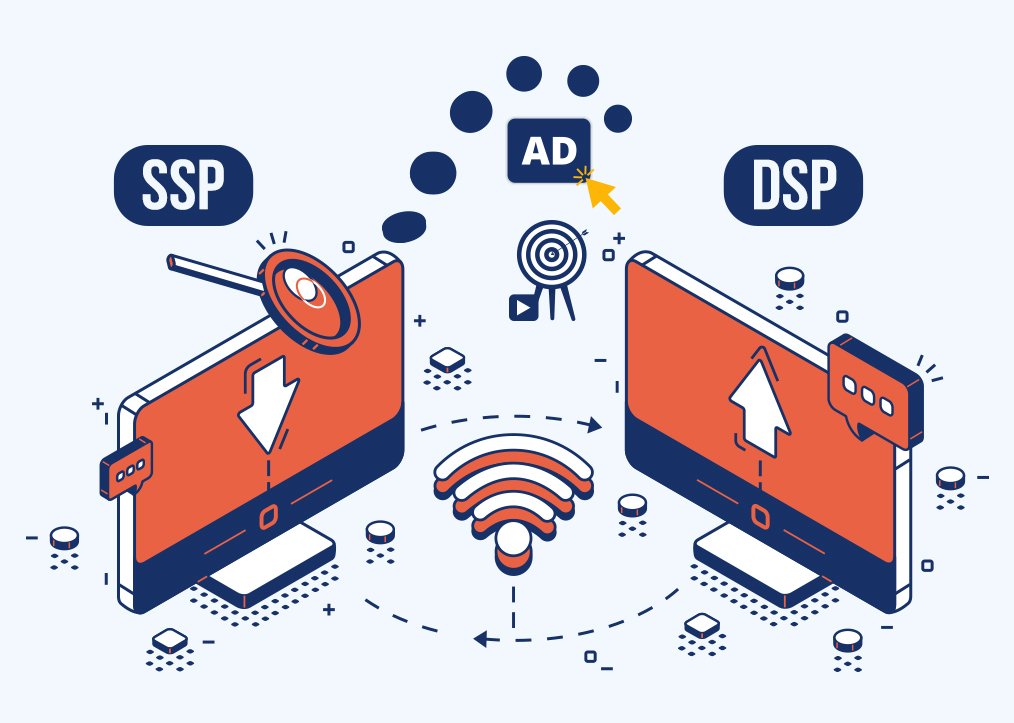
Programmatic advertising has transformed how digital ads are bought and sold. But behind every programmatic campaign are three core components that make everything work seamlessly: SSPs, DSPs and Ad Exchanges.
If these terms feel confusing, you’re not alone. Many brands and even agencies use programmatic advertising without fully understanding how these platforms interact.
This article breaks down SSP vs DSP vs Ad Exchange in simple terms, so you know exactly what each does, how they differ and why all three are essential in modern digital advertising.
What Is a DSP (Demand-Side Platform)?
A Demand-Side Platform (DSP) is used by advertisers and agencies to buy digital ad inventory programmatically.
Instead of contacting publishers directly, advertisers use a DSP to:
- ✅ Access inventory from multiple ad exchanges
- ✅ Select specific audiences
- ✅ Set budgets and bids
- ✅ Optimize campaigns in real time
- ✅ Measure performance transparently
A DSP is where advertisers make decisions.
At Trzy Next, we run campaigns using The Trade Desk, an independent DSP built for the open internet. This allows us to manage campaigns for brands and agencies across display, video, OTT, CTV, audio and mobile environments.
What Is an SSP (Supply-Side Platform)?
A Supply-Side Platform (SSP) is used by publishers, not advertisers.
Publishers use SSPs to:
- ✅ Make their ad inventory available to buyers
- ✅ Set minimum prices (floor prices)
- ✅ Manage which ads appear on their properties
- ✅ Maximize revenue from their ad space
SSPs help publishers sell impressions efficiently by connecting them to multiple ad exchanges and DSPs at once.
In simple terms:
- ✅ DSP = buying side
- ✅ SSP = selling side
What Is an Ad Exchange?
An Ad Exchange is the digital marketplace that connects DSPs and SSPs.
It’s where the actual transaction happens.
Every time a user loads a page, opens an app, or starts a video:
- The publisher sends the impression via an SSP
- The ad exchange runs a real-time auction
- DSPs place bids based on targeting and budget
- The highest and most relevant bid wins
- The ad is served instantly
All of this happens in milliseconds.
| Component | Used By | Primary Role |
|---|---|---|
| DSP | Advertisers & Agencies | Buy ads, select audiences, manage budgets |
| SSP | Publishers | Sell ad inventory and maximize yield |
| Ad Exchange | Both | Marketplace where auctions occur |
Each plays a distinct role, but none work alone.
How They Work Together in Programmatic Advertising
Think of programmatic advertising like a stock market:
- ✅ SSPs list available inventory (supply)
- ✅ DSPs place bids based on advertiser demand
- ✅ Ad Exchanges run the auction and decide the winner
This structure allows advertising to be:
- ✅ Automated
- ✅ Scalable
- ✅ Audience-based
- ✅ Transparent
- ✅ Cost-efficient
Why This Matters for Brands and Agencies
Understanding the difference between SSPs, DSPs and ad exchanges helps advertisers make smarter decisions.
Benefits for advertisers include:
- ✅ Better control over where ads appear
- ✅ More accurate audience targeting
- ✅ Reduced media waste
- ✅ Real-time performance optimization
- ✅ Clear reporting and transparency
When advertisers use the right DSP, they gain access to multiple ad exchanges and premium inventory, without dealing with individual publishers.
Where The Trade Desk Fits In
The Trade Desk sits firmly on the DSP side of the ecosystem.
It allows brands and agencies to:
- ✅ Access inventory from leading ad exchanges
- ✅ Run cross-channel campaigns from one platform
- ✅ Select specific audiences using data-driven signals
- ✅ Set, control and optimize budgets in real time
- ✅ Measure performance across channels
Through Trzy Next, brands and agencies can access The Trade Desk platform with expert consulting support, making programmatic advertising easier and more effective.
SSP, DSP and Ad Exchanges in OTT & CTV Advertising
OTT and Connected TV advertising rely heavily on this ecosystem.
- ✅ SSPs represent streaming platforms and publishers
- ✅ Ad exchanges run auctions for video inventory
- ✅ DSPs decide which ad reaches which viewer
This allows brands to target OTT and CTV audiences with the same precision as digital ads, while benefiting from premium, big-screen environments.
Final Thoughts
SSPs, DSPs and ad exchanges are not competing technologies, they are interconnected parts of the same system.
- ✅ DSPs help advertisers buy smarter
- ✅ SSPs help publishers sell better
- ✅ Ad exchanges make it all happen in real time
When combined correctly, they power the modern programmatic advertising ecosystem.
With Trzy Next and The Trade Desk, brands and agencies can navigate this ecosystem confidently, running transparent, scalable and performance-driven campaigns across the open internet.
Trzy Next – Media Buying Made Easy. Programmatic Advertising Made Smarter.
FAQs – SSP vs DSP vs Ad Exchange
Q1. What is the main difference between SSP, DSP and ad exchange?
A DSP is used by advertisers to buy ads, an SSP is used by publishers to sell ad inventory and an ad exchange is the marketplace where buying and selling happen through real-time auctions.
Q2. Do advertisers need to use SSPs directly?
No. Advertisers usually interact only with DSPs. The DSP connects to multiple SSPs and ad exchanges on behalf of the advertiser.
Q3. Why are ad exchanges important in programmatic advertising?
Ad exchanges enable real-time bidding, allowing advertisers to buy impressions efficiently while publishers maximize the value of their inventory.
Q4. Where does The Trade Desk fit in this ecosystem?
The Trade Desk is a Demand-Side Platform (DSP) that allows advertisers and agencies to access inventory from multiple ad exchanges and run cross-channel programmatic campaigns.
Q5. Can brands access The Trade Desk through Trzy Next?
Yes. Brands and agencies can access The Trade Desk platform through Trzy Next, with consulting-led support for strategy, setup, optimization and reporting.