As programmatic advertising continues to grow, choosing the right Demand-Side Platform (DSP) has become a critical decision for brands and agencies. Two names dominate most conversations: Google Display & Video 360 (DV360) and The Trade Desk.
Both platforms allow advertisers to buy digital media programmatically, but they are built with very different philosophies, access models and levels of control.
This article breaks down DV360 vs The Trade Desk in a clear, practical way, so you understand how each works and why many brands today prefer the flexibility of The Trade Desk.
What is DV360?
Google Display & Video 360 (DV360) is Google’s enterprise DSP. It is part of the Google Marketing Platform and is deeply integrated with Google-owned properties.
DV360 is often used by large advertisers who already rely heavily on Google’s ecosystem.
Key Characteristics of DV360
- ✅ Strong integration with Google Ads, YouTube and Google Analytics
- ✅ Primarily focused on Google-owned and Google-preferred inventory
- ✅ Limited transparency into certain supply paths
- ✅ Often requires higher minimum spends and access through Google partners
DV360 works well for advertisers who want to stay fully within Google’s ecosystem, but that same structure can also limit flexibility.
What Is The Trade Desk?
The Trade Desk is an independent, global DSP built for the open internet. It does not own media properties, which means it has no incentive to prioritize one publisher over another.
This independence is what makes The Trade Desk popular among brands and agencies that want full control, transparency and scale.
At Trzy Next, we run campaigns exclusively through The Trade Desk, enabling us to execute media buying for any brand, agency, or advertiser across channels and markets.
DV360 vs The Trade Desk: Key Differences Explained
1. Inventory Access
- ✅ DV360: Strong access to Google inventory (YouTube, Google Display Network), but limited visibility beyond Google-controlled environments.
- ✅ The Trade Desk: Access to a wide range of premium publishers, OTT platforms, CTV, mobile apps, audio platforms and open-internet inventory.
Why it matters:
The Trade Desk gives advertisers broader reach without being locked into a single ecosystem.
2. Audience Targeting & Data Control
- ✅ DV360: Uses Google data signals, but audience flexibility can be restricted by platform rules.
- ✅ The Trade Desk: Allows advertisers to select specific audiences, activate first-party data, use open data marketplaces and build custom segments.
With The Trade Desk, brands can:
- ✅ Target by behavior, interest, location and intent
- ✅ Use first-party and third-party data
- ✅ Build lookalike audiences
- ✅ Adapt to a cookie-less future using advanced identity solutions
3. Open Directory & Transparency
- ✅ DV360: Operates largely within Google’s controlled supply chain.
- ✅ The Trade Desk: Offers an open directory, giving visibility into where ads appear and how inventory is sourced.
This transparency helps advertisers:
- ✅ Avoid low-quality placements
- ✅ Maintain brand safety
- ✅ Understand exactly where budgets are spent
4. Budget Control & Flexibility
- DV360: Often suited to large, fixed-budget advertisers.
- The Trade Desk: Allows advertisers to set, control and optimize budgets dynamically, regardless of campaign size.
At Trzy Next, we can launch and manage campaigns on The Trade Desk for:
- ✅ Startups
- ✅ Growing brands
- ✅ Enterprises
- ✅ Agencies managing multiple clients
There’s no rigid one-size-fits-all structure.
5. Cross-Channel Capability
- ✅ DV360: Strong for display and YouTube video.
- ✅ The Trade Desk: Built for true cross-channel programmatic advertising, including:
- – Display
- – Video
- – OTT & CTV
- – Audio
- – Mobile apps
- – Digital out-of-home (DOOH)
- – Display
All managed from a single platform with unified reporting.
Why Trzy Next Uses The Trade Desk
At Trzy Next, our goal is simple: make media buying easy, transparent and effective.
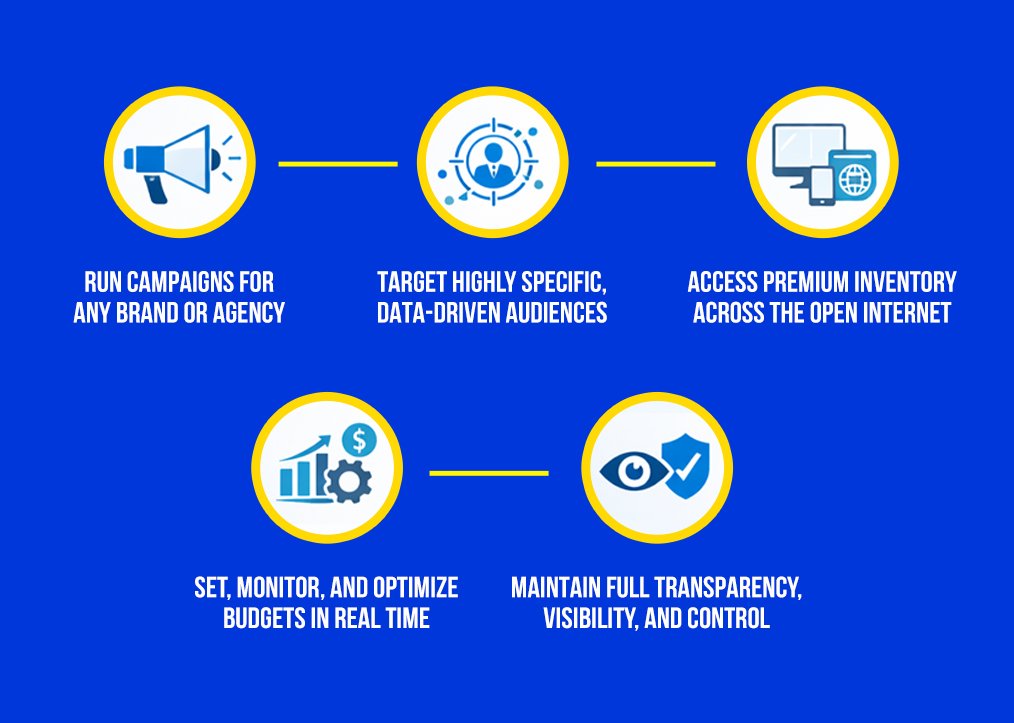
We choose The Trade Desk because it allows us to:
- ✅ Run campaigns for any brand or agency
- ✅ Select highly specific audiences
- ✅ Access premium inventory across the open internet
- ✅ Set and optimize budgets in real time
- ✅ Maintain full visibility and control
Because The Trade Desk is independent, our decisions are driven by performance and relevance, not platform bias.
Which Platform Should You Choose?
There is no single “right” answer for everyone.
- ✅ If your strategy is heavily dependent on Google-owned properties and YouTube, DV360 may fit your needs.
- ✅ If you want flexibility, transparency, broader reach and audience-first media buying, The Trade Desk is often the better choice.
For brands and agencies in India looking to scale programmatic campaigns across channels, The Trade Desk offers a future-ready approach.
Final Thoughts
The real difference between DV360 and The Trade Desk is not just technology, it’s philosophy.
DV360 operates within a closed ecosystem.
The Trade Desk is built for the open internet.
At Trzy Next, we use The Trade Desk to help brands and agencies run smarter, more transparent and more controllable programmatic campaigns, without restrictions.
Trzy Next – Media Buying Made Easy. Programmatic Advertising Made Smarter.
FAQs – DV360 vs The Trade Desk
1. What is the main difference between DV360 and The Trade Desk?
DV360 operates within Google’s ecosystem, while The Trade Desk is an independent DSP built for the open internet. The Trade Desk offers broader inventory access, more transparency and greater flexibility in audience targeting and media buying.
2. Which platform offers better audience targeting capabilities?
The Trade Desk allows advertisers to select highly specific audiences using first-party data, third-party data and open data marketplaces. This makes it easier to build precise, intent-based targeting strategies compared to more closed platforms.
3. Can I control and optimize my budget easily on The Trade Desk?
Yes. The Trade Desk provides full control over budgets, bidding strategies and pacing. Campaigns can be optimized in real time, making it suitable for brands, agencies and advertisers of any scale.
4. Is The Trade Desk suitable for cross-channel programmatic advertising?
Absolutely. The Trade Desk supports display, video, OTT, CTV, audio, mobile app advertising and DOOH, all managed from a single platform with unified reporting and insights.
5. How does Trzy Next support campaigns on The Trade Desk?
Trzy Next offers consulting-led programmatic solutions using The Trade Desk. We help brands and agencies plan strategy, select the right audiences, structure campaigns, manage budgets and optimize performance throughout the campaign lifecycle.
6. Can I access The Trade Desk platform through Trzy Next?
Yes. Brands and agencies can access The Trade Desk platform through Trzy Next. We enable you to run campaigns on The Trade Desk with expert support, ensuring proper setup, compliance, optimization and transparent reporting, without needing direct platform onboarding.
7. Who should use Trzy Next’s consulting solution for The Trade Desk?
Our consulting solution is ideal for:
- ✅ Brands new to programmatic advertising
- ✅ Agencies looking for execution support
- ✅ Advertisers wanting better control and transparency
- ✅ Teams that want expert guidance while running campaigns on The Trade Desk