
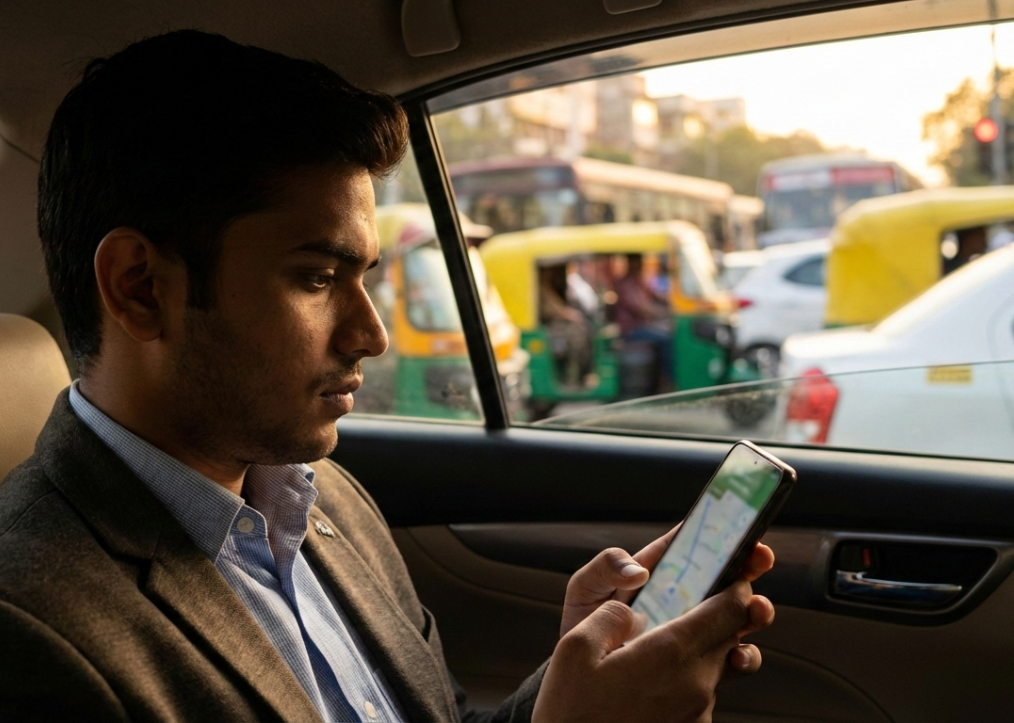
Uber is not just a ride-hailing app anymore.
It is one of the most frequently used mobility platforms in urban India.
Every day, millions of users open Uber with a clear purpose, to travel somewhere. This moment of intent, combined with time spent inside the app during a ride, makes advertising on Uber highly valuable for brands targeting city-based audiences.
Why Ads on Uber Work So Well
Uber ads work because of context and attention.
Unlike social media, where users scroll quickly, Uber users:
- ✅ Actively use the app
- ✅ Spend 10–30 minutes per ride on average
- ✅ Are focused, not distracted
- ✅ Often travel during key decision moments (office, airport, events)
This creates a high-attention advertising environment.
Uber’s Audience Profile (Why It Matters for Advertisers)
Uber’s user base in India is largely:
- ✅ Urban and metro-focused
- ✅ Working professionals
- ✅ Students and young adults
- ✅ Frequent travelers and office commuters
In major cities, Uber usage is especially strong during:
- ✅ Morning office hours
- ✅ Evening commute time
- ✅ Airport and railway station travel
- ✅ Weekends and leisure travel
For advertisers, this means repeat exposure to the same quality audience, not random reach.
Who Should Advertise on Uber? (Use-Case Driven)
Ads on Uber are especially effective for:
- ✅ Real estate brands targeting city buyers
- ✅ Education institutions promoting admissions
- ✅ Fintech & banking brands reaching professionals
- ✅ QSR and food brands driving local demand
- ✅ Events & movie promotions before release
- ✅ Local services & apps with city-level focus
If your audience lives, works, or travels in cities, Uber ads fit naturally.
Ad Formats Available on Uber
Uber supports multiple ad formats designed for strong recall.
1. In-App Display Ads
Shown while users are booking a ride or during the journey.
These ads benefit from repeated visibility during a single trip.
2. Full-Screen Brand Takeovers
High-impact placements that appear at key moments such as ride start or mid-ride.
3. Journey-Based Ads
Ads triggered based on:
- ✅ Airport rides
- ✅ Office commutes
- ✅ Late-night travel
- ✅ Weekend leisure trips
This makes messaging more relevant.
4. Audio Ads (Limited Inventory)
In select formats, audio ads play during rides, useful when users are not actively looking at their screen.
How Targeting Works for Uber Ads
Uber advertising allows contextual and location-based targeting, such as:
- ✅ City or zone-level targeting
- ✅ Trip type (airport, daily commute, leisure)
- ✅ Time of day
- ✅ Device and usage patterns
- ✅ Behavioral and demographic signals
This ensures ads are shown when they make sense, not randomly.
How Uber Ads Fit Into Programmatic Advertising
Uber ads work best when they are part of a programmatic media plan, not standalone placements.
When combined with programmatic advertising, brands can:
- ✅ Align Uber ads with OTT & CTV campaigns
- ✅ Retarget Uber users on display and mobile
- ✅ Control frequency across channels
- ✅ Measure performance in one ecosystem
This turns Uber ads into a cross-channel touchpoint, not just a single exposure.
Why Uber Ads Can Outperform Only Google & Meta Ads
Google and Meta ads are crowded and expensive.
Common challenges today:
- ✅ Rising CPCs and CPMs
- ✅ Ad fatigue on social feeds
- ✅ Same audience seeing the same ads repeatedly
Uber ads offer:
- ✅ Lower clutter
- ✅ High contextual relevance
- ✅ Strong attention during travel time
- ✅ Better recall for city-based campaigns
For many brands, Uber ads become a smart alternative channel, not a replacement, but a differentiator.
How Trzy Next Helps Brands Run Ads on Uber
At Trzy Next, we help brands use Uber advertising as part of a modern, programmatic strategy.
We support:
- ✅ Uber ad strategy and planning
- ✅ City and journey-based targeting
- ✅ Creative format selection
- ✅ Budget pacing and optimization
- ✅ Cross-channel integration (OTT, display, audio)
- ✅ Transparent reporting and insights
Uber ads perform best when supported by OTT, display and audio advertising, creating consistent visibility across screens and real-life moments.
Best Way to Use Uber Ads (Practical Advice)
Uber ads work best when:
- ✅ Used for awareness + recall
- ✅ Combined with OTT or CTV video
- ✅ Supported by display retargeting
- ✅ Focused on city-level objectives
They are especially effective for launch phases, promotions and time-bound campaigns.
Final Thoughts
Advertising on Uber is not about mass reach.
It’s about high-quality urban attention.
With millions of daily rides, long session times and location-based relevance, ads on Uber offer brands a rare opportunity to connect during moments that matter.
When combined with programmatic advertising and premium digital channels, Uber ads help brands stand out beyond crowded Google and social platforms.
FAQs – Ads on Uber
Q1. Who should advertise on Uber?
Uber advertising works well for brands targeting city-based users, including real estate, education, fintech, food, events, entertainment and local services.
Q2. What ad formats are available on Uber?
Uber supports in-app display ads, full-screen brand ads, journey-based ads and limited audio ad formats depending on inventory availability.
Q3. How is Uber advertising different from Google or Meta ads?
Unlike Google or Meta ads, Uber ads appear in a low-clutter environment during real-life moments like commuting or travel, leading to higher attention and recall.
Q4. Can Uber ads be part of a programmatic advertising strategy?
Yes. Uber ads work best when combined with programmatic advertising, OTT, display and audio campaigns to create consistent cross-channel visibility.
Q5. How does Trzy Next help brands run ads on Uber?
Trzy Next helps brands plan, execute and optimize Uber advertising campaigns, including targeting strategy, creative formats, budget planning and performance tracking.